Case Study: When Training Meets Industry Needs—Building the Workforce of Tomorrow
From Skills Gaps to Opportunity in Côte d’Ivoire’s Tourism Sector
Located on the West African coast, Côte d’Ivoire is home to vibrant cities, cultural traditions, and diverse landscapes. After years of political instability, it has emerged as one of the region’s largest economies and is working to unlock the full potential of its growing tourism sector. With Sublime Côte d’Ivoire, the country’s tourism strategy, the government aims to make Côte d’Ivoire one of Africa’s top five tourist destinations by increasing the number of visitors to the country, raising the sector’s contribution to Gross Domestic Product (GDP), and creating hundreds of thousands of jobs. One key barrier the strategy seeks to address is the shortage of adequately trained personnel in the tourism and hospitality industry.
To respond to this challenge, one of the strategy’s nine pillars prioritises the development of a high-quality national tourism education and training system. This skills gap not only hinders the growth of the tourism sector but also limits graduates’ employability prospects in a rapidly expanding industry where nearly half of the workforce is women.
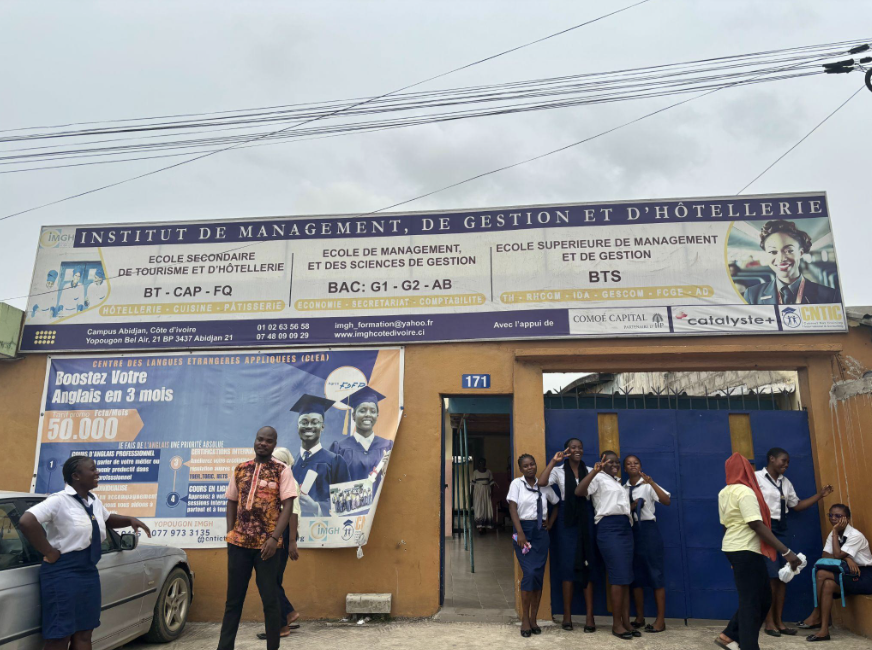
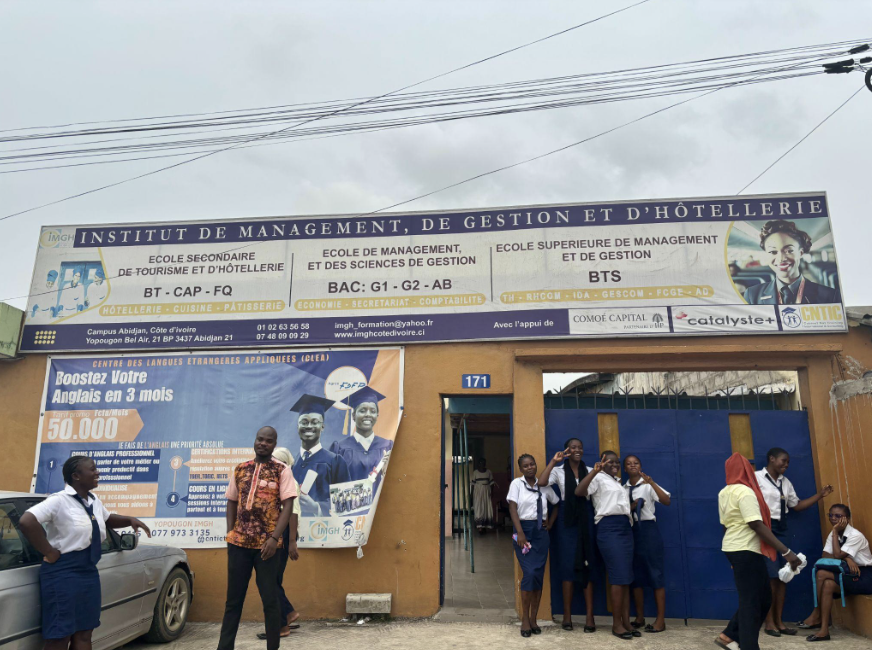
In response to the shortage of qualified graduates in cooking and pastry, Ms. Augustine Bro Lou, Chief Executive Officer (CEO), decided to create the Institut de Management, de Gestion et d’hôtellerie (IMGH) in 1999 in Yopougon-Bel-Air, Abidjan. Today, more than 25 years later, IMGH has become a leading provider of vocational and professional training in Côte d’Ivoire, with more than 450 graduates, 90% of whom are women. The IMGH offers accredited vocational and technical training programs ranging from Certificate of Professional Aptitude (CAP) to Higher Technician Certificate (BTS) levels, including qualifications in tourism, hospitality, culinary arts, and hotel operations.
The institution combines technical instruction with extensive practical experience, maintaining strong links with the hospitality industry through partnerships with leading hotels and luxury establishments. In addition to its diploma programs, IMGH provides customized professional development training and operates a high-quality catering service, further enhancing learners’ exposure to real-world industry practices. Through these programs, IMGH helps equip learners with the skills needed to succeed in the tourism and hospitality sectors.
A Partnership that Shaped IMGH’s Growth
IMGH and Catalyste+ started working together in 2001, when the Institute only had two classes with 12 students each. The partnership began when Ms. Bro identified the need to strengthen the skills of both instructors and students, enabling them to improve their competencies while increasing the attractiveness and professional recognition of careers in the tourism and hospitality sector. Over the past two decades, Catalyste+ and the IMGH have worked together to address multiple challenges with assignments ranging from technical culinary and pastry training to educational programs and curriculum development.
One of the major obstacles IMGH faced was that most trainers were experienced hospitality practitioners but lacked formal training in pedagogy. As a result, many struggled to design and implement course plans and apply effective teaching practices. During the AWE project, two Catalyste+ Advisors, Guy Dongue and Jacques Latulippe, have played a key role in helping IMGH adapt to changing industry and training requirements. With support from Advisor Guy Dongue, the Institute addressed gaps in teaching methodology, course planning, and instructional design. Together, they developed a competency-based education program and strengthened the capacity of staff and instructors to effectively develop and use course plans and syllabi, improving the quality and consistency of teaching and learning. The syllabi are now provided to students upon enrolment, creating a more structured and transparent learning experience while enabling parents to better monitor their children’s academic progress.
Building on Guy’s recommendations on pedagogical tools and best practices, the Institute also introduced a more structured and regular teacher evaluation system and expanded its network of industry partnerships. Teachers now conduct student evaluations every two to three months using standardized assessment tools. To complement these improvements, Catalyste+ Advisor Jacques Latulippe supported the introduction of a final assessment for six-month qualifying programs where students are evaluated based on the competencies developed throughout the course. This approach enables IMGH to better measure learners’ progress and ensure graduates possess the knowledge and technical skills required to enter the labour market.
Empowering Students Through Practical Learning
Following the collaboration with Catalyste+ Advisors Guy Dongue and Jacques Latulippe, IMGH identified that its pastry and culinary labs lacked the equipment needed to provide hands-on training and replicate real working conditions in the industry. To improve the quality of training and better prepare learners for labour market requirements, the Advisors recommended modernizing these learning spaces.
In response, IMGH received support from the AWE Innovation Micro-fund (AIMf) to acquire essential equipment, including a refrigerator, pots, whisks, a knife set, cutting boards, a pizza roller, a thermometer, a spatula, a hand mixer, and a stockpot. These new tools now enable learners to develop their skills in an environment that more closely reflects the realities of the hospitality and food service sector.
Quality of Practical Training
The acquisition of the new equipment transformed the quality of practical training at IMGH. Today, instructors have the tools to deliver more structured, practice-oriented courses that better reflect professional working environments. Learners benefit from more interactive training, working in smaller groups, developing greater autonomy, and gaining more hands-on experience. The equipment has also enabled instructors to teach advanced techniques that were previously difficult or even impossible to demonstrate, including precise sponge cake cutting using professional cake levellers, chocolate tempering with appropriate thermometers and spatulas, and the preparation of viennoiseries and complex yeasted doughs using professional mixers and beaters.
These improvements have translated into stronger learner performance. According to IMGH, both practical and theoretical assessment results have improved since the introduction of the new equipment. The average scores on practical exams increased from approximately 11/20 to 15.5/20. Learners now reproduce techniques with greater accuracy, demonstrating improved technical mastery, particularly in fine pastry skills such as plating, cutting, baking, and assembly, while also working more efficiently with the new industry-standard equipment.
Increase in Learners’ Skill Levels and Confidence
Beyond strengthening technical skills, IMGH observed a significant increase in self-confidence among many women learners thanks to the AIMf. Exposure to professional equipment and learner-centred, participatory teaching methods helped them feel more capable of applying their knowledge in practice and taking on new challenges. Learners reported feeling better prepared for the professional world, increasing their motivation to pursue employment or entrepreneurial opportunities and strengthen their economic autonomy.
Building on these skills and confidence, approximately 68% of graduates launched small income-generating activities following their training, supported in part by the equipment provided through the AIMf. They now produce cakes, cookies, pastries, and viennoiseries from home and sell them to their communities via local markets and social media platforms. Some have also established small catering businesses for children’s parties, family receptions, and community meetings, offering simple but professionally presented services. Equipped with stronger technical skills and greater confidence, they are better able to showcase their products, engage with clients, and manage orders through WhatsApp, Facebook, and Instagram.
By combining high-quality practical training with an environment that empowers women, the AIMf enabled learners to strengthen both their technical competencies and their self-confidence—two essential elements for their long-term professional success.
Achieving National Recognition
Building on learners’ strengthened skills and increased confidence, IMGH expanded its approach to student development by establishing the Talent Club. Designed to encourage excellence and identify highly motivated learners, the program brings together students who demonstrate exceptional passion and commitment, providing them with additional support to further develop their skills and reach their full potential.
The Talent Club also serves as a pathway to professional competitions in which IMGH participates. Candidates are selected among club members based on academic performance, motivation, creativity, and engagement, allowing the Institute to identify, develop, and showcase emerging talent. This approach produced strong results when IMGH earned third place in culinary arts and pastry at its first professional competition, WorldSkills Côte d’Ivoire 2025. Organized by the Ministry of Technical Education, Vocational Training and Apprenticeship (METFPA) under the theme “Trades at the Heart of Economic Growth,” the competition brought together young professionals from across the country to showcase their skills. This achievement not only strengthened learners’ confidence but also enhanced the institution’s reputation, marking an important milestone in IMGH’s participation in professional skills competitions.
Strengthening Partnerships and Institutional Recognition
These achievements in learner development and competition performance have also increased IMGH’s visibility and expanded its network of professional partnerships, transforming how the Institute is perceived by external stakeholders. Today, IMGH is recognized as a structured and credible training provider, building trust among industry actors, including hotels and other organizations seeking qualified and reliable training partners. As a result, the Institute now receives weekly inquiries and visits from hospitality and restaurant establishments across the country interested in internships, recruitment, partnerships, and training collaboration. These growing relationships provide learners with direct exposure to high-end, professional industry environments. For example, in February 2026, IMGH students visited the prestigious five-star hotel Maison Palmier as part of their training, gaining first-hand insights into luxury hospitality standards. The immersive learning experience included guided tours of professional facilities, exchanges with hospitality experts, and networking opportunities, further bridging the gap between classroom learning and industry practice.
Increase in Enrollment Numbers
By providing learners with a better-equipped training environment that more closely aligns with labour market standards, IMGH has strengthened both its reputation and its attractiveness to prospective students. Learner outcomes have also improved significantly. For the Technician Certificate program, the pass rate among students benefiting from the new equipment increased from 80% in 2023–2024 to 100% in 2025. Employment integration rates have also increased and become more sustainable. Prior to the AIMf, some graduates left their jobs shortly after being hired because they lacked the practical skills required by employers. Today, graduates are better prepared to meet industry expectations and remain employed.
These improvements have also translated into institutional growth. Over the past year, IMGH recorded an estimated 10% to 15% increase in revenue, alongside a similar rise in enrolment in its qualifying training programs. Each cohort, typically composed of 20 to 25 learners over six months, has become more consistently filled since the upgrade of the training equipment, reflecting growing demand for hands-on, quality training aligned with industry standards.
Highlighting the Institute’s growing reputation, Ms. Bro noted, “Strengthening our institution’s capacity with Catalyste+ has set us apart from our competitors in both our pedagogical approach and our management practices. This has become a key driver of our continued growth in student enrollment. The number of graduates increased from 460 in 2025 to 570 in 2026, and we observed a 20% increase in graduate employability.”
Graduate Testimonial
The experience of Naomie Kanga, a former IMGH student, illustrates how the collaboration between Catalyste+ and IMGH has shaped learners’ journeys. She first discovered the institute through an online search while looking for a training program that would help her develop practical skills and build a career. She enrolled in the culinary arts and pastry program—a decision that marked a turning point in her life.
Before joining IMGH, Naomie had basic cooking knowledge but no formal training in pastry or experience using professional equipment such as mixers, blenders, or electric dough sheeters. Through the program, she developed new technical pastry skills while strengthening her creativity and know-how through hands-on experience with modern equipment. Beyond technical competencies, the training gave her a clear understanding of professional expectations and the workplace environment.
For Naomie, one of the program’s key impacts has been her readiness for the labour market. The professional learning environment at IMGH helped her build the knowledge, work habits, and confidence needed to enter the workforce. “Today, I am capable of carrying out the tasks assigned to me,” she explains.
This confidence enabled her to secure an internship in Assinie, a popular seaside destination known for its restaurants, where she applies her newly acquired skills every day. She also noted that some of the equipment used during her training was more advanced than what was available at her internship, making her transition into the workplace easier and reinforcing her confidence in her abilities.
During her internship, Naomi also demonstrated the leadership and innovation skills she developed at IMGH. Committed to promoting healthier food practices, she suggested reducing the routine use of industrial seasoning cubes in certain recipes. Her recommendation was adopted by the team, resulting in changes to their food preparation practices.
Alongside her internship, Naomie launched her own income-generating activity. She produces wedding cakes, mini cakes, and mini pizzas, marketing her products through social media platforms and WhatsApp. With approximately three orders each month, the business generates about 736 CAD annually, providing her with greater financial autonomy and allowing her to better support herself and her child.
Naomi’s positive experience has also made her an ambassador for IMGH. She regularly encourages young people interested in hospitality and culinary careers to enrol, highlighting the exceptional quality of the training, the professionalism of the staff, and the importance of teamwork throughout her journey.
Driven by strong entrepreneurial spirit, Naomie now dreams of opening her own restaurant. She also aims to continue expanding her expertise, particularly in European and Asian cuisine, while strengthening her leadership skills to grow her business. Her journey illustrates how high-quality vocational training can strengthen self-confidence, open doors to employment, and create concrete opportunities for economic empowerment.
Looking Ahead
As IMGH continues to grow, it remains at the forefront of a rapidly expanding tourism and hospitality sector in Côte d’Ivoire, where evolving industry demands require continuous adaptation in teaching approaches, curricula, and equipment to prepare the workforce of tomorrow. Since its early collaboration with Catalyste+ Advisors, the Institute has evolved into a leading provider of vocational and professional training. With Catalyste+’ support, IMGH has strengthened its visibility, introduced new teaching approaches, improved instructional quality, developed syllabi, implemented new evaluation methods, and built strategic partnerships and collaborations. The addition of highly practical training, supported by the equipment acquired through the AIMf, has further enhanced the relevance of its programs and significantly improved graduates’ readiness for the labour market.
Building on these achievements, IMGH plans to introduce certification examinations for its professional training programs and open a larger campus in Abidjan to expand access to high-quality vocational education. The Institute also aims to increase graduate employment rates, broaden its network of internship and industry partners, and continue promoting women’s economic empowerment and professional advancement.
Catalyste+ will continue to support IMGH as it strengthens its institutional capacity, enhances the quality and relevance of its training programs, and creates greater opportunities for women to succeed in one of Côte d’Ivoire’s most dynamic economic sectors.
Acknowledgments
Catalyste+ would like to thank Elodie Desrochers and Sabrina Iriarte for leading the creation of this case study, as well as Claudia Aparicio, Augustine Bro Lou, Jean Jacques Gogahi, Naomie Kanga, Jacob Kobenan, Stephane Mambo Paul, Dominique Mane, and Brianna Marshall, whose valuable contributions helped make this publication possible.