Building More Than Desks: How Partnerships Are Helping Strengthen Rehabilitation in Guyana
Written by: Henry Weinman
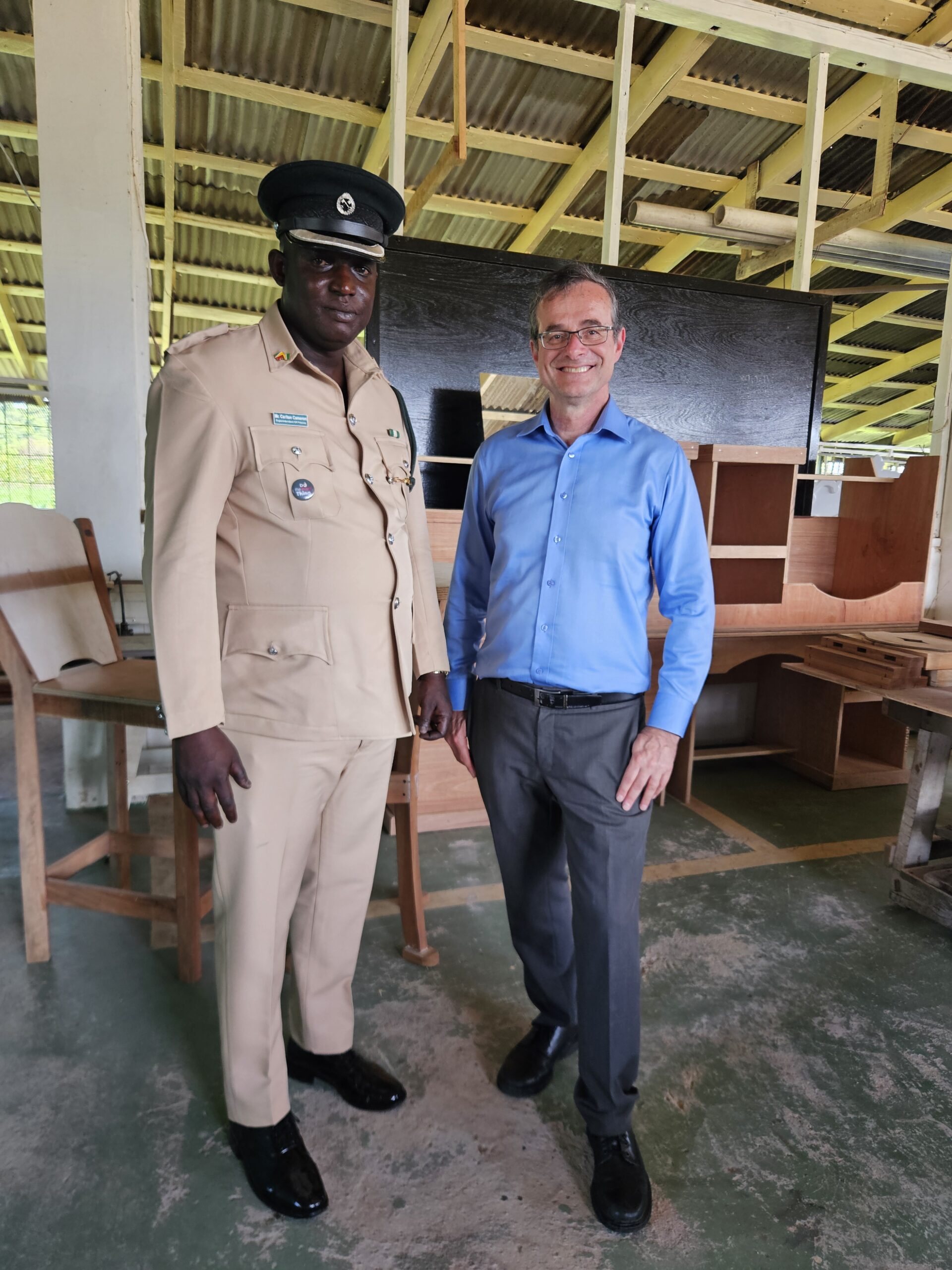
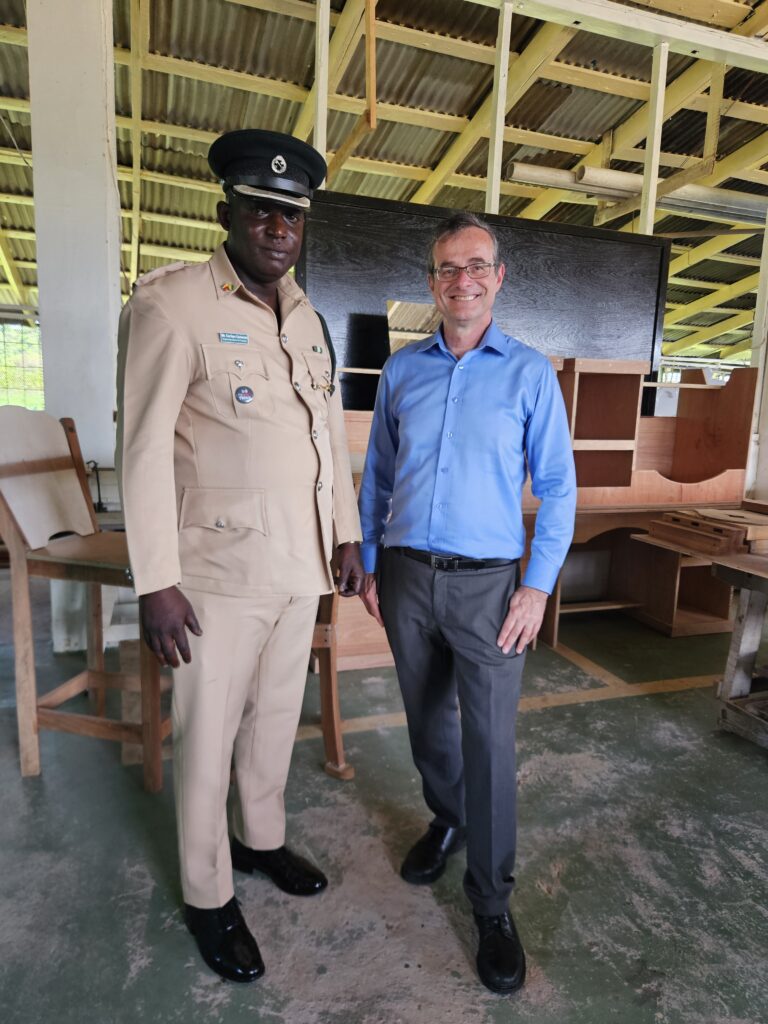
Correctional staff at the Guyana Prison Service have a commitment to rehabilitation through vocational training that was evident during my assignment.
“Are you here to gather information, or are you ready to do business?”
I wasn’t expecting the question.
It came from Guyana’s Chief Education Officer during one of our first meetings after I arrived as a Catalyste+ advisor. I had expected to spend the morning discussing the Guyana Prison Service (GPS) inmate joinery program and learning about the Ministry’s needs.
Instead, he wanted to know if we were ready to begin.
“We’re ready to do business,” I replied.
I travelled to Guyana to help strengthen the GPS inmate joinery program by reviewing its operations, pricing and long-term sustainability. I expected to spend most of my time discussing production, pricing and business strategy.
Instead, it was the commitment of the people that left the greatest impression.
As I visited prison workshops across Guyana, I quickly realized the joinery program was about much more than woodworking. The correctional officers spoke proudly about the inmates they trained and the confidence they saw developing through meaningful work. One officer mentioned, almost in passing, that when essential supplies weren’t available, staff sometimes purchased them with their own money so the training could continue.
He wasn’t looking for recognition.
It was simply what they did.
That quiet act of generosity told me everything I needed to know about the commitment behind the program.
The inmates shared that same sense of purpose. Walking through the workshops, the scent of freshly cut wood lingered in the air as inmates patiently measured, shaped and assembled furniture one piece at a time.
One workshop had several newly completed student combination desks and chairs ready for delivery. Their clean lines and carefully rounded edges immediately caught my attention. These weren’t practice projects. They were well-built pieces of furniture that any school would be proud to receive.
At another workshop, a white-painted headboard stopped me in my tracks. Its elegant curves, crisp detailing and raised wooden nameplate looked as though they had come from a custom furniture maker. I later learned the finish had been applied entirely with a brush because the workshop didn’t have a spray gun.
Curious, I stepped closer, looking for brush marks.
I looked closely but couldn’t find a single one.
The finish was remarkably smooth.
Each letter of the name had been individually cut from wood and carefully mounted by hand.
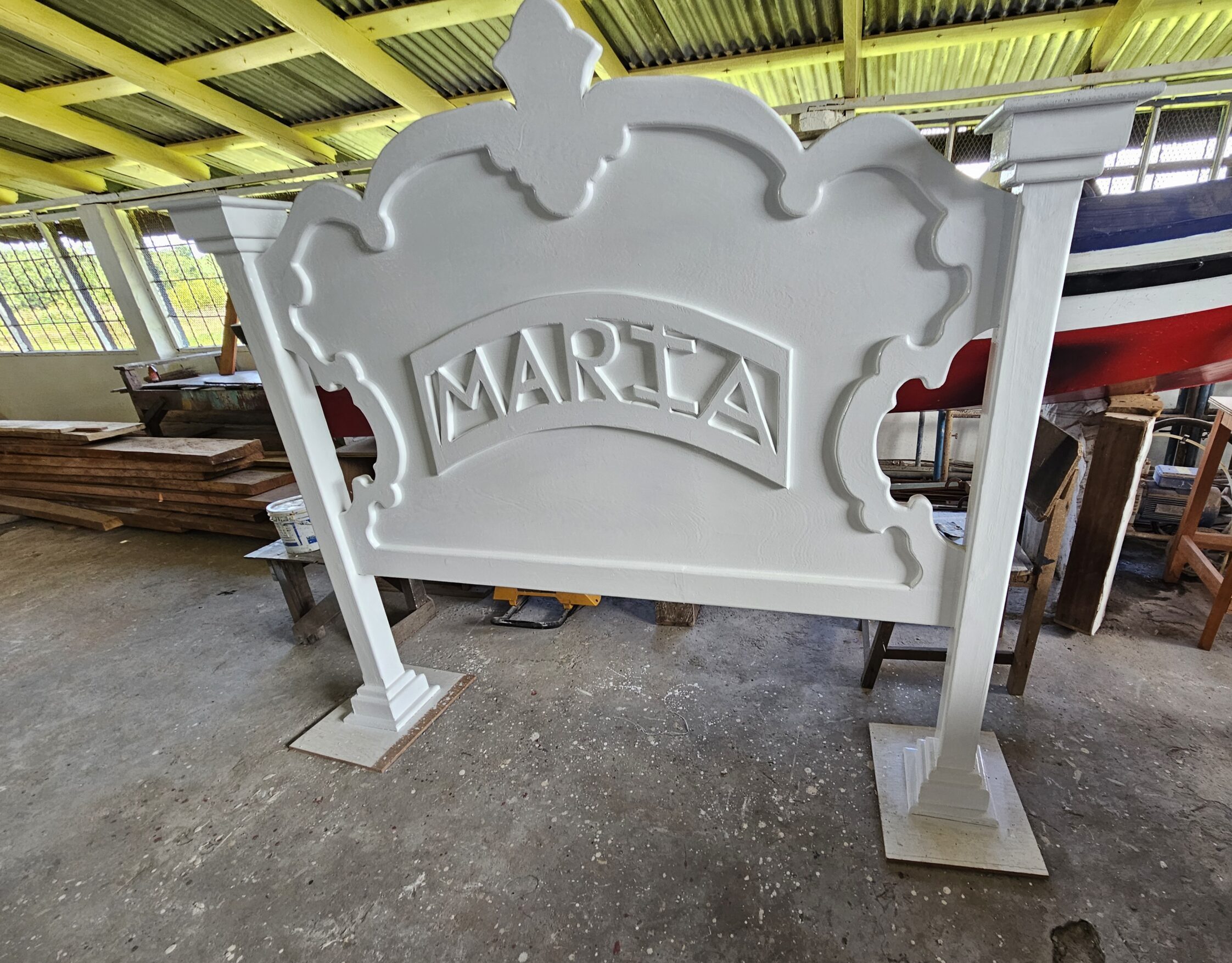
This headboard was painted entirely with a brush because the workshop had no spray gun. The raised wooden nameplate was individually crafted by hand, reflecting the pride and craftsmanship developed through the program.
Standing there, I realized that craftsmanship isn’t defined by the tools you have, but by the pride you take in your work.
Working with GPS leadership, we explored how correctional industries in North America had created sustainable business models by selling their products at market prices and reinvesting the proceeds into training and growth. Together, we examined how a similar approach could strengthen the joinery program and create opportunities for more inmates.
The most exciting opportunity emerged through meetings with the Government of Guyana.
The Chief Education Officer immediately recognized that this initiative wasn’t simply about purchasing school furniture.
“This is a great thing that we’re doing for the inmates,” he said.
When I mentioned that several workshops lacked sufficient protective eyewear, he immediately replied, “We can help with that.”
That simple response reflected something I encountered throughout my assignment: a genuine commitment to creating opportunities for inmates to build a better future.
The discussion quickly turned to the Ministry’s need for school furniture.
“How many student desks and chairs can you produce each month?” he asked.
Before the meeting ended, he requested that GPS prepare a Memorandum of Understanding to begin moving the partnership forward.
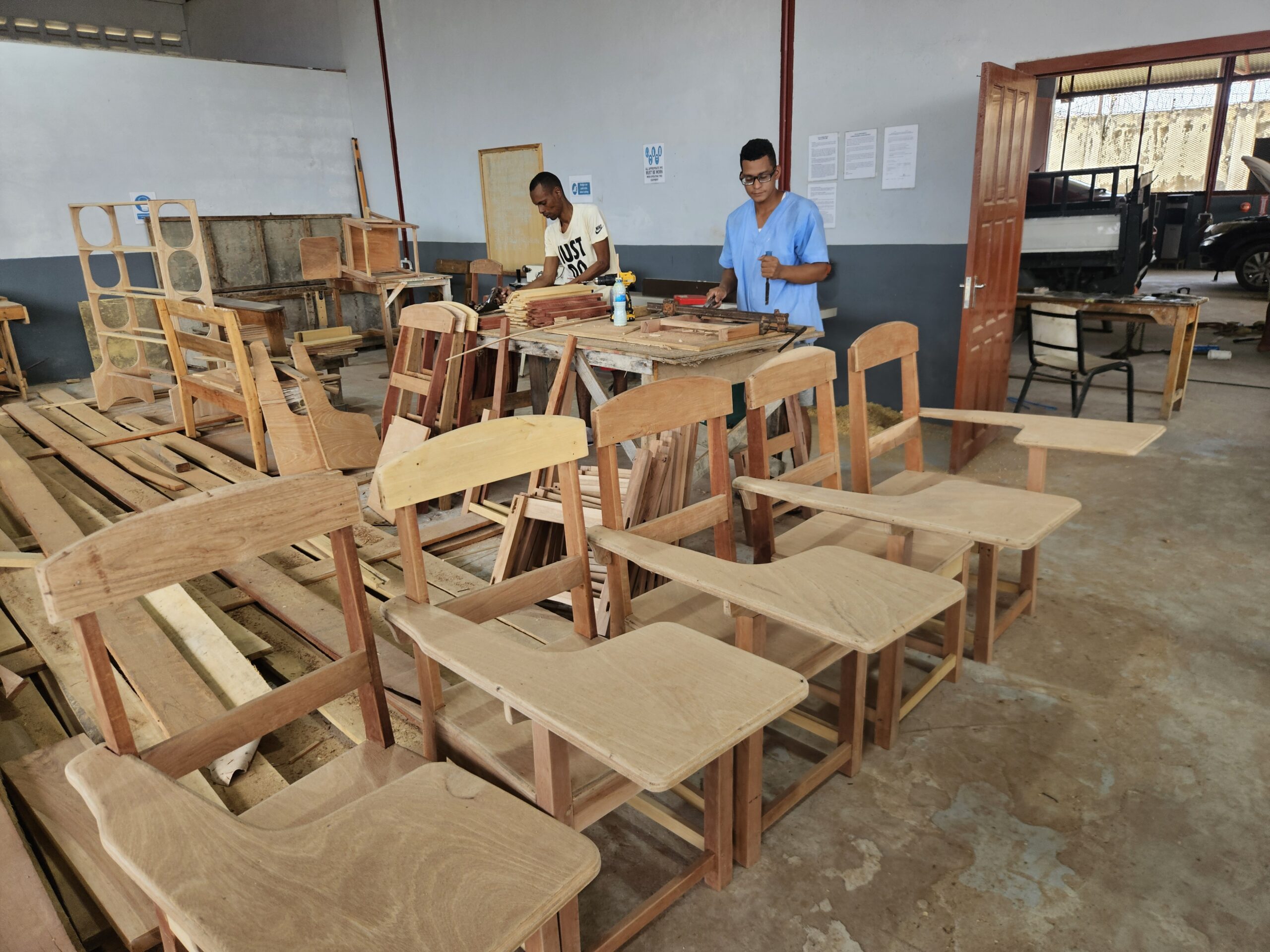
Student combination desks and chairs built by inmates in the Guyana Prison Service joinery program. Each piece reflects the skills, care and pride developed through vocational training.
A subsequent meeting with the Permanent Secretary reinforced that same spirit of collaboration. Rather than focusing on obstacles, he offered practical suggestions for streamlining the program’s financial administration so future revenues could be reinvested into its growth.
What surprised me most wasn’t the business opportunity.
It was how quickly people from every part of the program—correctional officers, government leaders and prison administrators—came together around a shared belief that rehabilitation deserved to succeed.
As my assignment came to a close, I didn’t know whether those conversations would become a long-term partnership. That chapter would be written by the dedicated people I was leaving behind.
What I did know was that an important foundation had been laid.
After more than thirty years of helping organizations strengthen their operations and build sustainable businesses, this assignment reminded me that business is about more than financial performance. When combined with committed leadership and a shared vision, it can create opportunity, restore dignity and strengthen rehabilitation.
I arrived in Guyana believing I was helping build a stronger business.
I left feeling convinced that when people share a common purpose, business becomes far more than an economic activity—it becomes a way of creating opportunity.