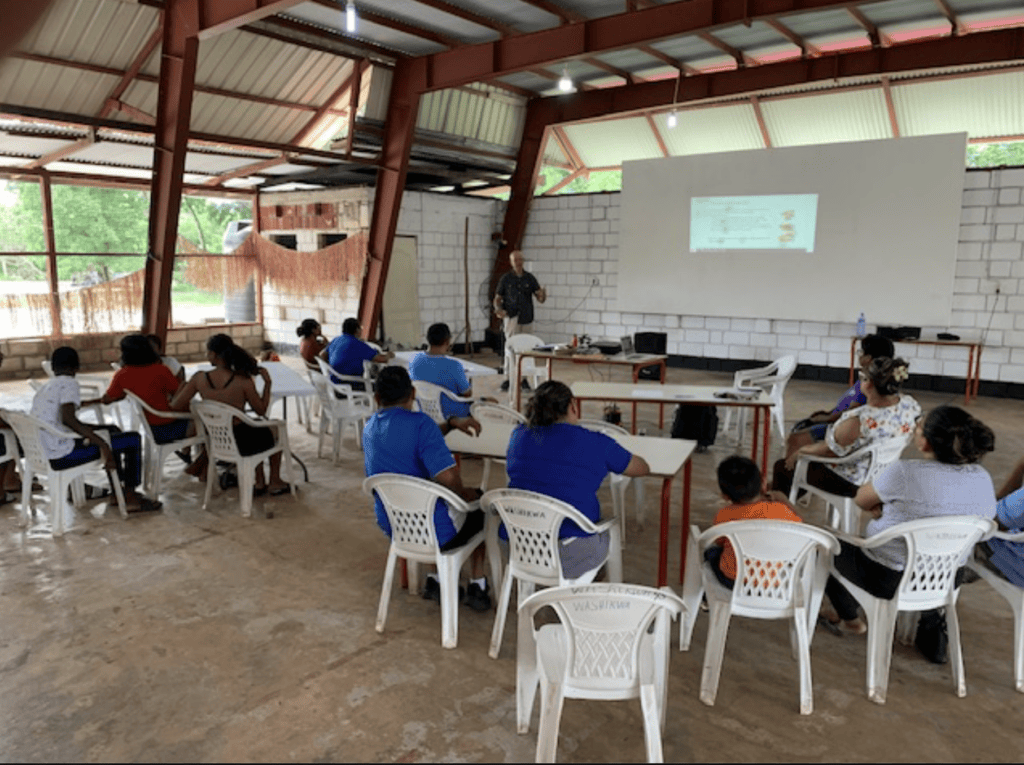
Case Study: Strengthening the Capacity of Local Development Partners in Belize
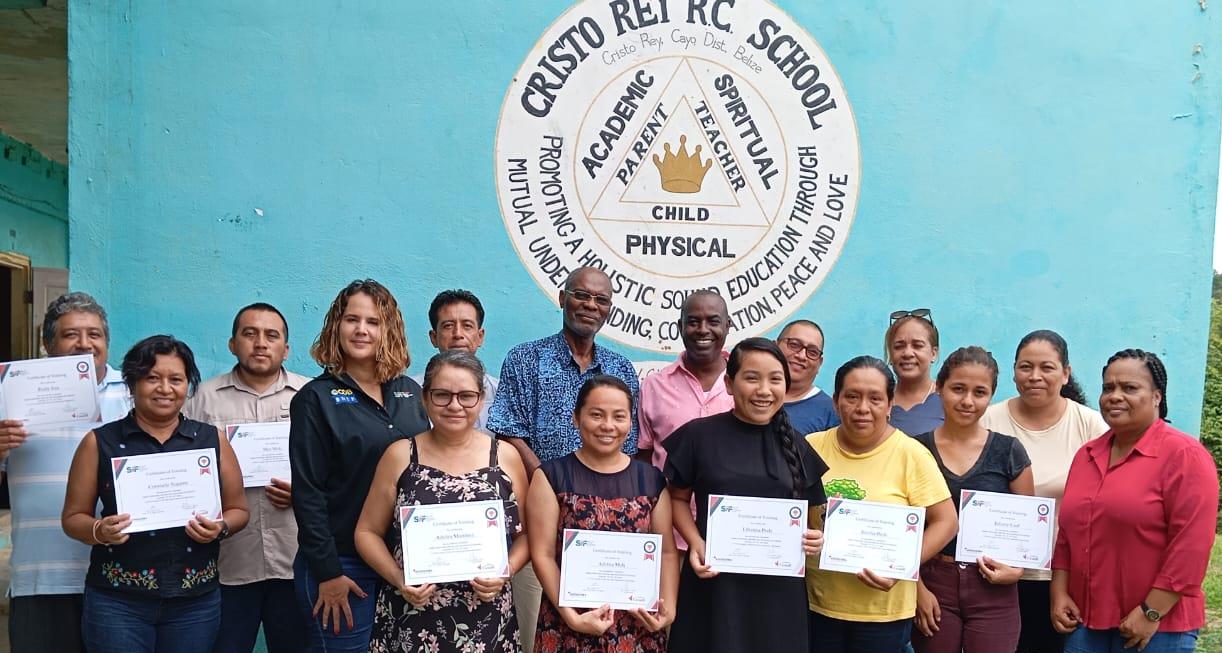
PTA Trainees receiving their certificate and Catalyste+ Advisor Willie Clarke-Okah in August 2024.
Belize, like many nations, faces complex development challenges with distinct local implications. For example, climate change vulnerabilities are identified in the Belize Medium-Term Development Strategy 2022-2026 as a serious national challenge requiring a holistic and multisectoral approach to address the frequent, recurrent impacts of climatic events on economic sectors, communities, and infrastructure.
Although development funding often comes from programs financed by state donors like Canada, there is a consensus amongst the international community that overcoming challenges and fostering locally sustained change hinges upon enhanced collaboration with people in the communities who face these challenges every day.
The compelling reason for locally led and locally implemented development is sustainability of programming results. While, at certain times, all countries may benefit from foreign advice and assistance, the outcome of development assistance should ultimately be policies and programs that remain in place after development support ends. This means policies and programs led and implemented by local actors.
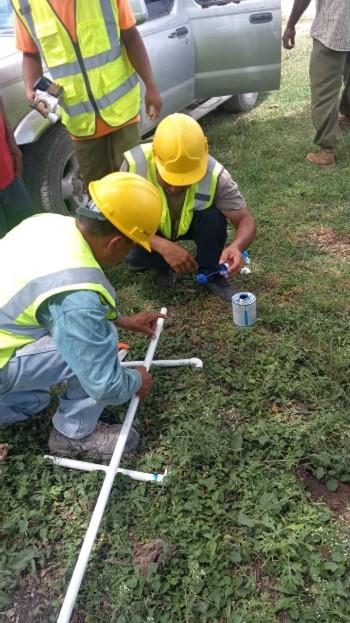
Water Meters Installation in BSIF implemented Potable Water Project in Chunox, Corozal.
But how can countries like Belize ensure local actors are equipped to have ownership over and meaningfully engage in the design and implementation of development efforts? The Catalyste+ Canada-CARICOM Expert Deployment Mechanism (CCEDM) program has been working with the Belize Social Investment Fund (BSIF), a quasi-government agency that implements development projects primarily in the health, education, and rural development sectors, to address this question.
What was the situation?
Established by the Government of Belize in 1996, the Belize Social Investment Fund has implemented more than 700 development projects that have had a national impact in the areas of Education, Water & Sanitation, Health, Social Services, Organizational Strengthening, and Economic Infrastructure.
These projects, primarily funded by the Caribbean Development Bank (CDB), the World Bank and the Government of Belize, are implemented in cooperation with community groups, whose members sometimes require assistance to bolster their capacities in targeted technical skills to develop and implement specific projects and interventions. The BSIF’s leadership requested assistance from Catalyste+ Advisors, who worked with both community members and the staff of BSIF on approximately half a dozen assignments throughout 2023 and 2024, supporting their capacities in several areas (evidence-based management, RBM, digital technology, etc.) and connecting processes with climate change adaptation as a cross-cutting need to attend to.
According to BSIF Technical Officer Mr. Dorian Avilez, the Fund is very enthusiastic about the learning results it has achieved thus far.
“When I was introduced to CCEDM, I was happy to hear about the range of expertise that could be requested to help BSIF and its community partners. One of the most impressive things is that these Advisors who come out to help are very serious people with advanced skills. They’re not here for a vacation,” said Dorian Avilez, BSIF Technical Officer.
How Catalyste+ Helped Frame a Solution
Between August 2023 and October 2024, six different Advisors travelled to Belize to address six different capacity development needs – three working directly with BSIF employees and three in local communities. The Advisors who assisted local community groups directly engaged with local citizens to transfer skills necessary for them to carry out their roles in a variety of projects. This involved everything from developing strategic fundraising ideas to maintain new school buildings, to managing local funds, to learning how to design and monitor project activities. At the BSIF, the Advisors’ work focused on building the capability of development staff to monitor environmental activities, a skill that is increasingly in-demand due to the large number of projects involving water management and other environmental issues. They also conducted training to increase staff knowledge about climate-smart technologies and helped the organization modernize its 1990s-era information management system.
While most of the assignments initially targeted the development of technical skills to implement specific development projects and interventions, the training often took a more comprehensive, results-oriented approach aimed at developing the collective leadership of local communities by, for example, incorporating evidence-based decision-making techniques that can be used to sort through and choose amongst options for how to address future issues which arise.
Results and Changes Observed
In the Summer of 2024, the community of Cristo Rey Village in Cayo District was nearing the final stages of construction on an 8-classroom primary school and preschool building. Their old school structure is structurally unsound and in danger of flooding from a nearby river, so the BSIF had secured resources to build a new school on higher ground.
Catalyste+ Advisor Dr. Willie Clarke-Okah, who had retired from a long career as an international education specialist with Global Affairs Canada and the World Bank, travelled to Belize to work with 15 men and women from the local parent-teacher association (PTA), including members of the faculty who had taken on responsibilities for assisting with the upkeep and maintenance of the new community facility. The local community was also interested in adding student facilities that were not included in the original school building budget, such as a cafeteria and fencing.
In August 2024, upon beginning his assignment, Dr. Clarke-Okah quickly identified a pressing need among community members to develop skills for identifying local donors and preparing proposals to raise funds that would be needed for small additions and upkeep projects related to the new school. In response, he organized a workshop to transfer this knowledge to the community members. By October 2024, the community had developed a gazebo/cafeteria construction proposal that was under consideration for funding at the Caribbean Development Bank.
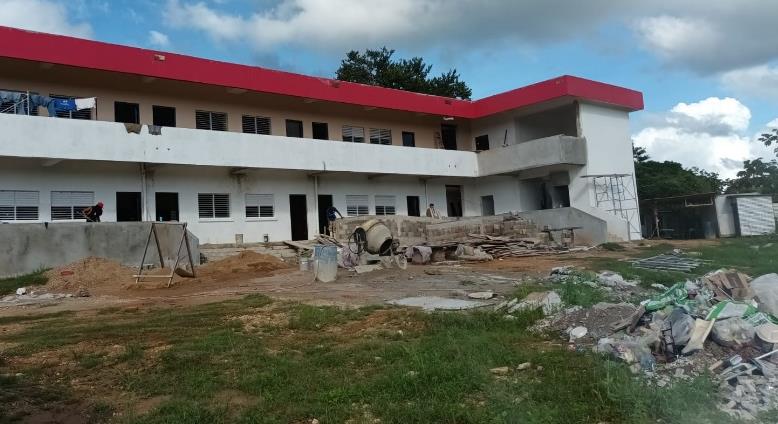
New Cristo Rey Village School
“It gets very hot inside the classroom by lunchtime,” said Cristo Rey School Principal Josue Tuyub. “We cater for more than 100 students at a time and want a shaded area where students can eat outdoors and enjoy the surrounding nature.” The community hopes to receive the CDB funding soon to construct the gazebo/cafeteria in time for the new school opening in February 2025.
Principal Tuyub, whose own 10-year-old son attends Cristo Rey School, explained that before Dr. Clarke-Okah’s training sessions, the school PTA used to raise very small amounts of funding by writing letters to local businesses but had no idea how to write a proposal.
“It’s a great opportunity for us because the training opened our minds to a different pool of donors and taught us how to prepare a proposal that gives a donor a clear idea of what we intend to do,” said Principal Tuyub.
Going forward, the community intends to develop proposals to raise funds for a range of facilities to benefit the children at Cristo Rey School, such as a security fence, a playground, and a water catchment system to collect and store enough water during the rainy season to tide them over during the dry season when the water supply is low.
Dr. Clarke-Okah explains that the capacity to design development projects and secure funding extends well beyond maintaining local facilities. It empowers local actors to lead their own development efforts by allowing them to shape and pursue their own initiatives.
“When communities have the ability to assess their own needs and successfully obtain funding, they take ownership of their own growth and progress,” said Dr. Willie Clarke-Okah.
In August 2023, two additional Catalyste+ Advisors, Monica Lent and Allan Clarke, provided workshops on business planning processes and evidence-based planning, monitoring, and decision-making in two other communities: Stann Creek and Gale’s Point Manatee.
“Often,” said Mr. Avilez, “the community members have a good understanding of what they want to do to help themselves. Their problem is determining how to frame that request and find an avenue to access funding.” The BSIF often acts as an intermediary to link a community group with a granting institution.
Of course, the BSIF has its own capacity development needs. Therefore, two advisory assignments focused on enhancing the BSIF’s capabilities in dealing with the climate change challenge—specifically, getting better organized to access available climate funds and implementing more climate-resilient community projects.
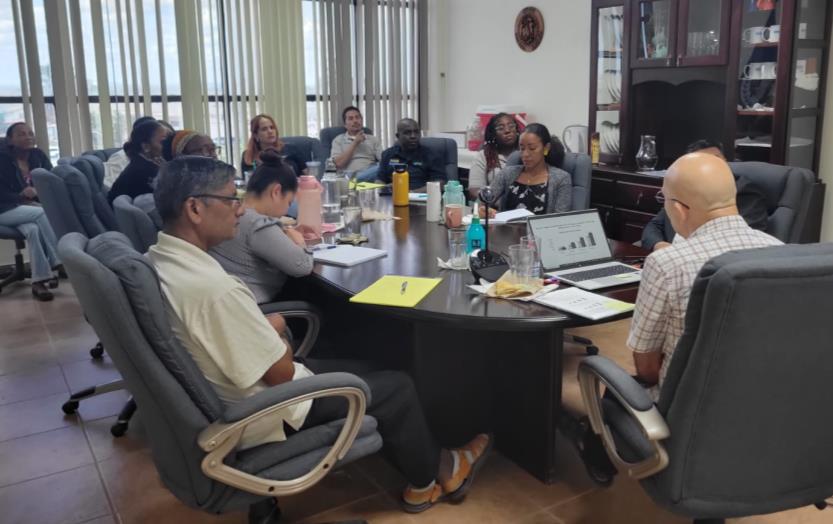
BSIF Staff in Climate Smart Technology Workshop with Catalyste+ Advisor James Ross on October 2023.
First, the BSIF needed to modernize its information management system and improve its data management, making greater use of digital technology to reduce paper waste. The organization was in the process of meeting Green Climate Fund (GCF) requirements to obtain accreditation and knew that pulling together a solid application would be partially contingent on its use of best practices in data storage. The ability to more easily access and utilize information about BSIF’s previously implemented programs would benefit all its operations. In September 2024, Catalyste+ Advisor Augusto Ribeiro reviewed BSIF’s existing data management system, provided training to 26 staff and managers and offered recommendations to the organization on using updated digital technology to improve its data security, storage and best practices. After the BSIF executive secures budget allocation to implement the recommendations, Advisor Ribeiro may return for a follow-up assignment to help BSIF initiate the change management needed to satisfy GCF accreditation.
With climate change concerns complicating community project design and delivery, the BSIF’s staff, who were already well-versed in the principles of sustainable development, needed help navigating through the variety of appropriate responses to design more climate-resilient projects. In October 2023, Catalyste+ Advisor James Ross worked with 22 BSIF staff and managers, delivering a series of workshops aimed at helping them to understand better the basic concepts and issues of climate change and vulnerabilities and acquire the knowledge of how to develop plans and projects to adapt to climate change or mitigate its effects for greater resilience.
The training increased the awareness of BSIF staff, enabling them to ensure that project consultants and contractors are applying climate-smart technologies in their designs and operations.
Next Steps
In the long term, the strengthening of capacities provided by Catalyste+ Advisors is contributing to a gradual increase in local actors’ abilities to ensure that development interventions have a greater chance of longevity, said Avilez.
“We (BSIF) could just build infrastructure,” Avilez said, “but that’s not good enough.” He has a priority list of local community learning needs and wants more Catalyste+ Advisors to help deliver it. On his list are quality control in construction, GIS training, environmental training, and, of course, enhancing more community groups’ proposal development capabilities.
CCEDM Program Manager Andrea Benavides says the program can continue providing Advisors in alignment with national priorities and within budgetary limits.
“Communities feel a real sense of agency when they have the means to help frame, deliver, and follow up the projects that benefit them,” she said, “and if local organizations like BSIF play the role of connecting community groups to project funding sources, we’ll do what we can to facilitate that local ownership.”